

Tsipouro Concept – Nea Anchialos

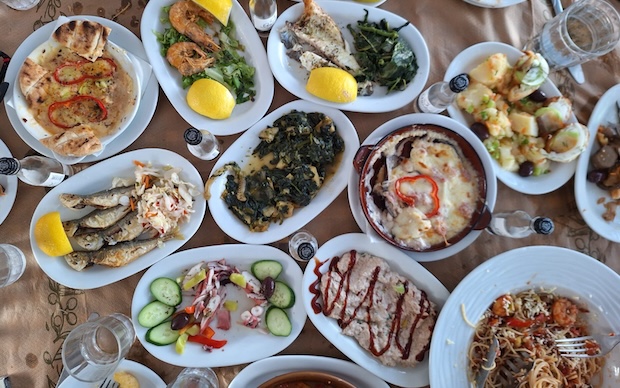
Tsipouro Concept – Nea Anchialos
What is Tsipouro?
Anyone who has been to Greece, whether on vacation or for business, has likely had the chance to try Tsipouro. Tsipouro is a traditional Greek drink, made by distilling grape pomace (the residue from pressing grape juice). It has a high alcohol content, usually between 40-45%. Tsipouro is popular in many parts of Greece and is often associated with social gatherings and enjoying food.
However, there is a place in Greece near Volos, called Nea Anchialos, where the “Tsipouro Concept” was established. We will discuss this concept later. This destination is an ideal stop on the way to the beautiful Peloponnese.

Nea Anchialos
The name “Nea Anchialos” means “New Anchialos,” reflecting the town’s roots and its founding by Greek refugees from the original Anchialos, today known as Pomorie in Bulgaria, after the Greco-Turkish War and subsequent population exchanges in the early 20th century.
The economy of Nea Anchialos is primarily based on agriculture, focusing on olive oil production, viticulture, and other Mediterranean crops.
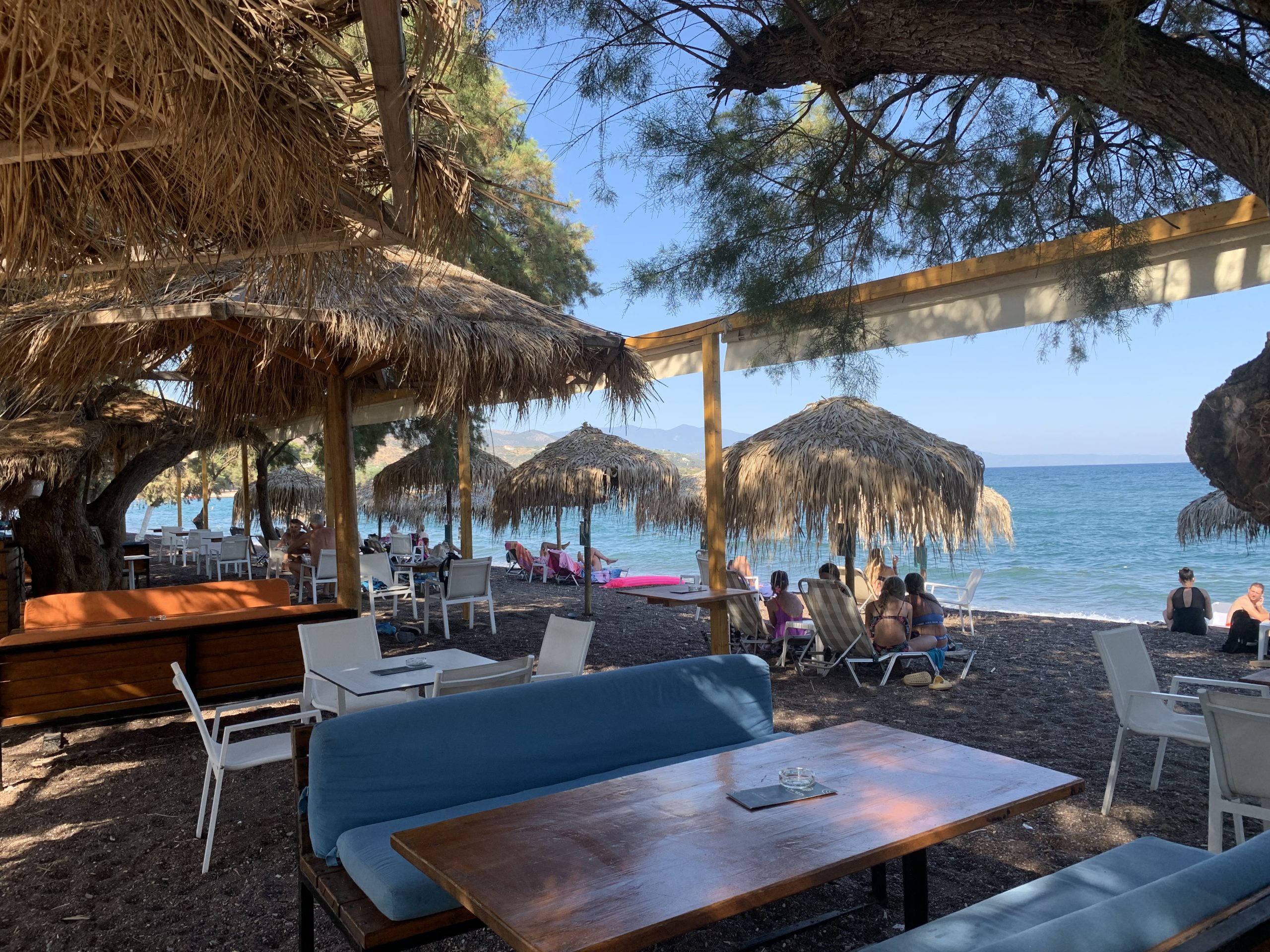
Being located on the coast, tourism has developed over the years. When you first walk through the town, it won’t remind you of well-organized tourist destinations like those on Halkidiki. There is a long beach with fine reddish sand and sunbeds for relaxation. Along the beach, there are plenty of trees, allowing you to enjoy natural shade.
What makes Nea Anchialos attractive, in our opinion, are two things. The first is a relaxed atmosphere, without noise and tension, where you can truly unwind and enjoy the sound of the sea waves. The second is that you will find seven taverns along the beach, with tables almost at the water’s edge, some even in the sand.
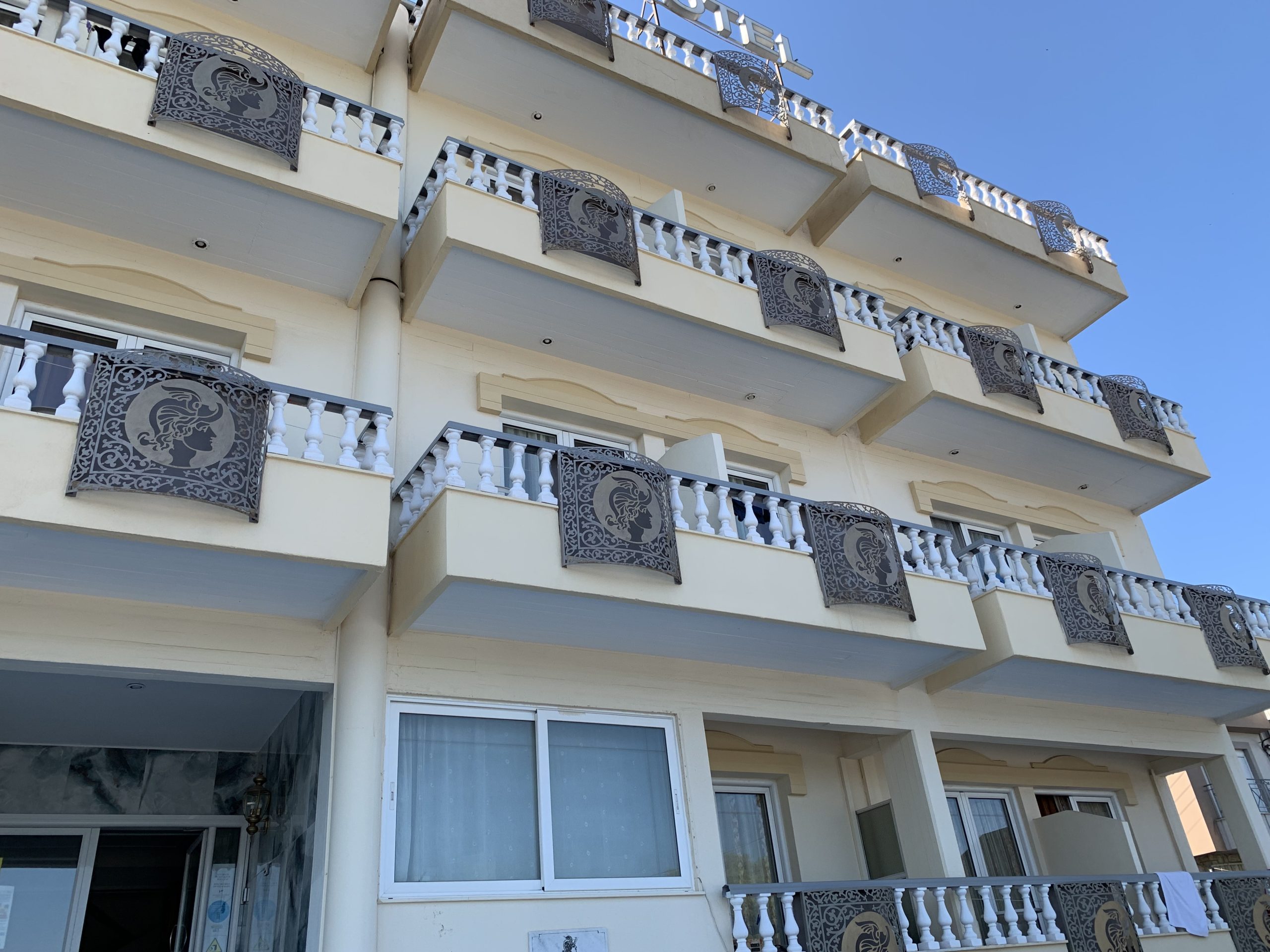
Our Host Asderakis Vassilis
In these taverns, one of the main offerings is the “Tsipouro Concept,” which was introduced to us by Asderakis Vassilis, the owner of Protessilaos Hotel. The first thing we learned from this seasoned tourism worker, who was educated in Greece and later in Switzerland with extensive practical experience, is that when sitting in a taverna, you should pull up an extra chair to rest your leg on. Of course, nowadays, you can also place your mobile phone, cigarettes, keys, etc., on it.
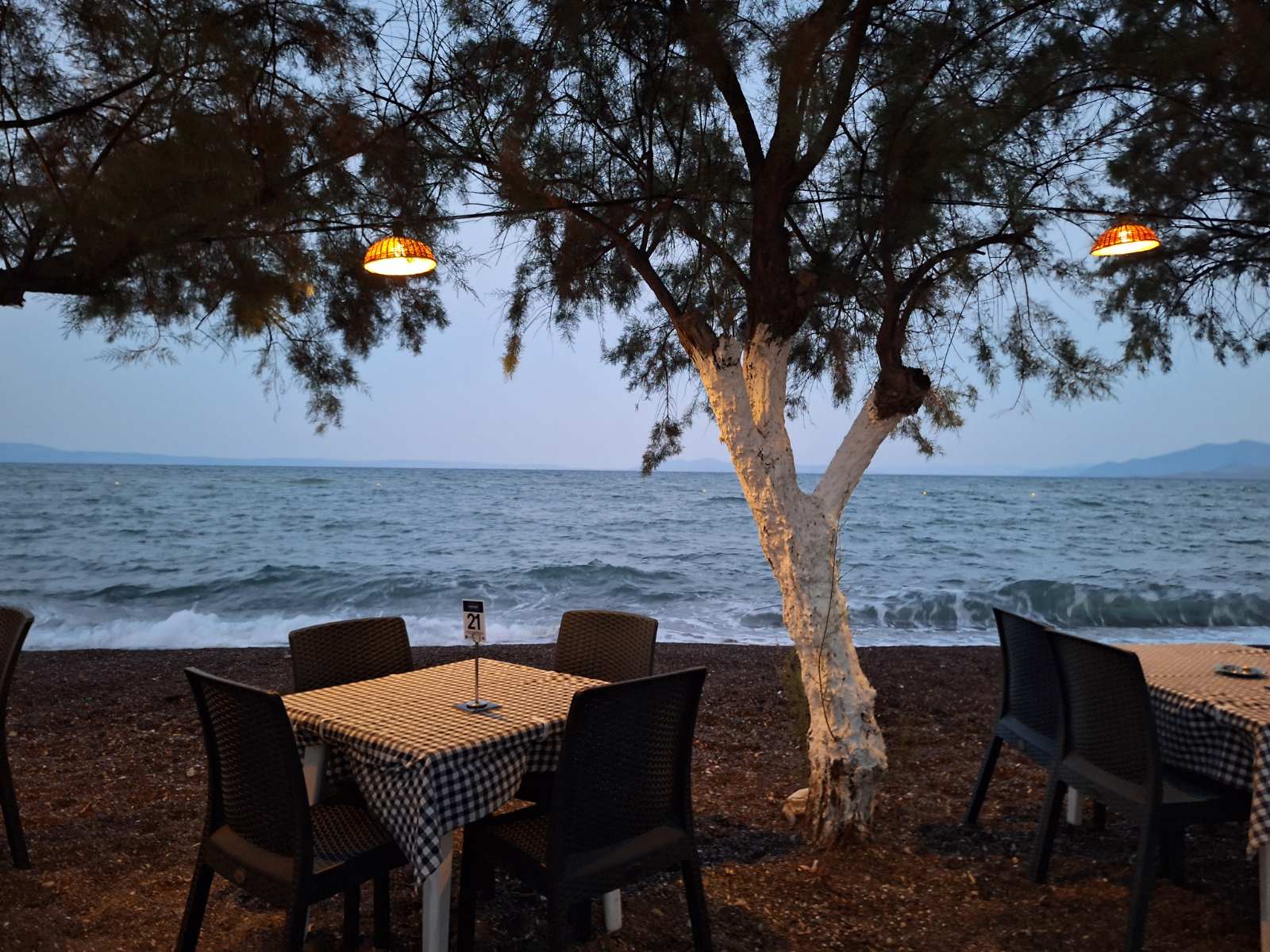
Tsipouro Concept
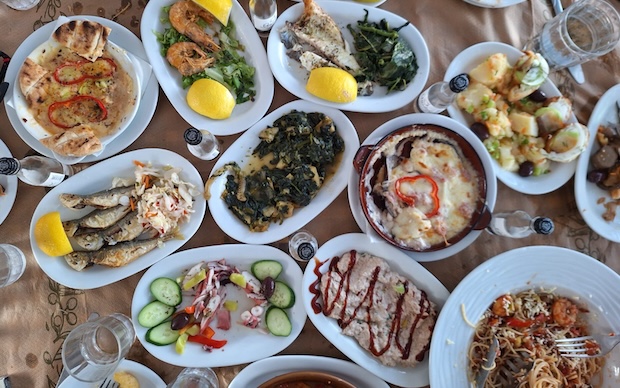
His first sentence was that when you sit in a taverna, there is a mantra you should repeat, which is: “Sit, take your time, look at the sea, and enjoy.” Then you order Tsipouro; the waiter brings two small bottles per person (since a person walks on two legs), and the first round of small plates with various dishes arrives. Vassilis says that the “Tsipouro Concept” is simple with the phrase: “Eat, drink, eat, drink.” In this arrangement, this strong drink can’t catch up with you too quickly. Tsipouro is served in tall, narrow glasses with two or three ice cubes, along with the customary toast “Yamas!” / “Cheers!” and clinking glasses while looking into each other’s eyes.
A Symphony of Flavors and Aromas
Each taverna has a similar menu, but it mainly features specialties that are not commonly seen on the table, such as large squid with chard, skate, baked cheeses with shrimp, small canapés with cream, onion, and smoked fish, etc. The “Tsipouro Concept” can last indefinitely, but an average evening includes over 20 different dishes and about eight small Tsipouro. Pictures speak louder than words…
Tourism Development
Nea Anchialos also has a large nearby airport, which many low-cost airlines use to bring tourists from Europe and beyond. His hotel is always full and operates year-round; however, Vassilis notes that the number of arrivals is decreasing, and he wants to take additional action to restore the old glory to this place. He promises that the “Tsipouro Concept” will soon be presented in Belgrade as well.
In any case, if your travels take you to this part of Greece or you are on your way to the Peloponnese, be sure to stop by Neo Anchialos and say hello to Vassilis. He has time for everyone, with the customary greeting: “Relax, everything will be ok.” So let everything be OK!